The AI proposes. You decide.
Free Honest Cheetah computes; it makes no AI calls at all. On a paid plan, a model helps with the writing: reviewing stories, fixing the usual problems with them, drafting the blank-page stuff, and writing up what happened on every project each day.
"AI-powered" is doing a lot of work on a lot of websites right now, so here's what it means here.
Four rules
Every output is a draft
Suggested requirements, drafted test cases, a proposed split, a rewritten story, a task breakdown: each arrives as something you can edit, select from or close. The AI never has the last word.
Nothing reaches GitHub without a click
Every write to your board is a button you pressed. There's no background agent editing your issues, and there isn't going to be one.
The model never does arithmetic
Metrics and forecasts are deterministic code, and they're free. When the AI explains your numbers, it's narrating figures Honest Cheetah already computed. It doesn't get to make any up.
Usage is capped per organization
Each organization has a monthly AI budget with a hard ceiling. When it's spent, the AI features pause until next month and everything else keeps working. No surprise bill.
What it reads
The AI works from your project's description and README, any agent instruction files in the repository (AGENTS.md, CLAUDE.md, copilot-instructions.md), and the requirement in front of it. That's it. It doesn't crawl your code, and it doesn't see other organizations' data. A board with no description gets told so before anything is drafted, because a draft with no context is a generic draft, and you'd notice.
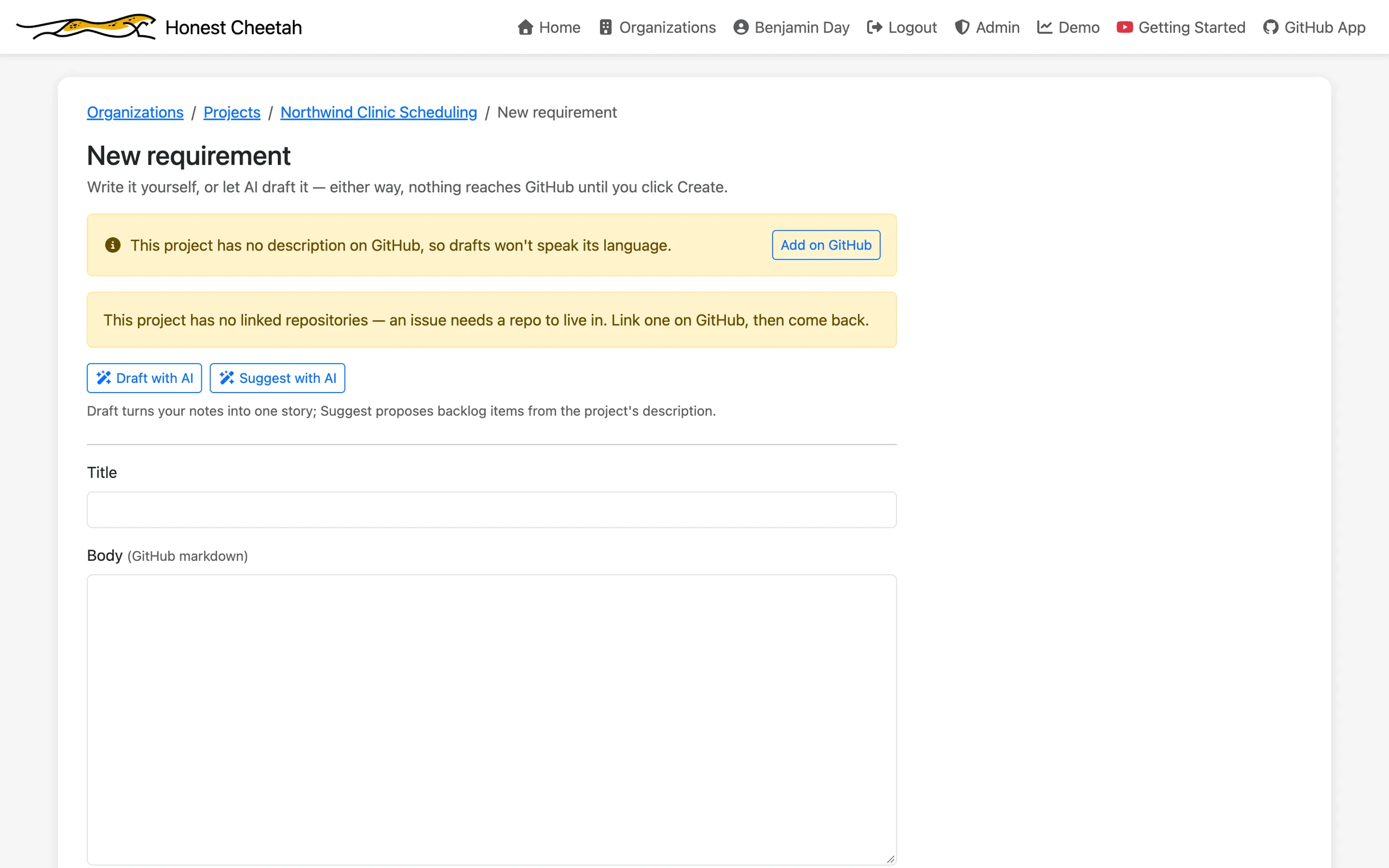
Could a tester read this story and know what passing looks like?
That's the whole question. Open a requirement and click Review. You get a verdict (Needs work · 4 findings), a one-sentence summary, and five checks: Title, Acceptance criteria, Detail, Duplicate, Size. Under each finding is the consequence, meaning what a tester or builder can't do because of it, and a concrete suggestion.
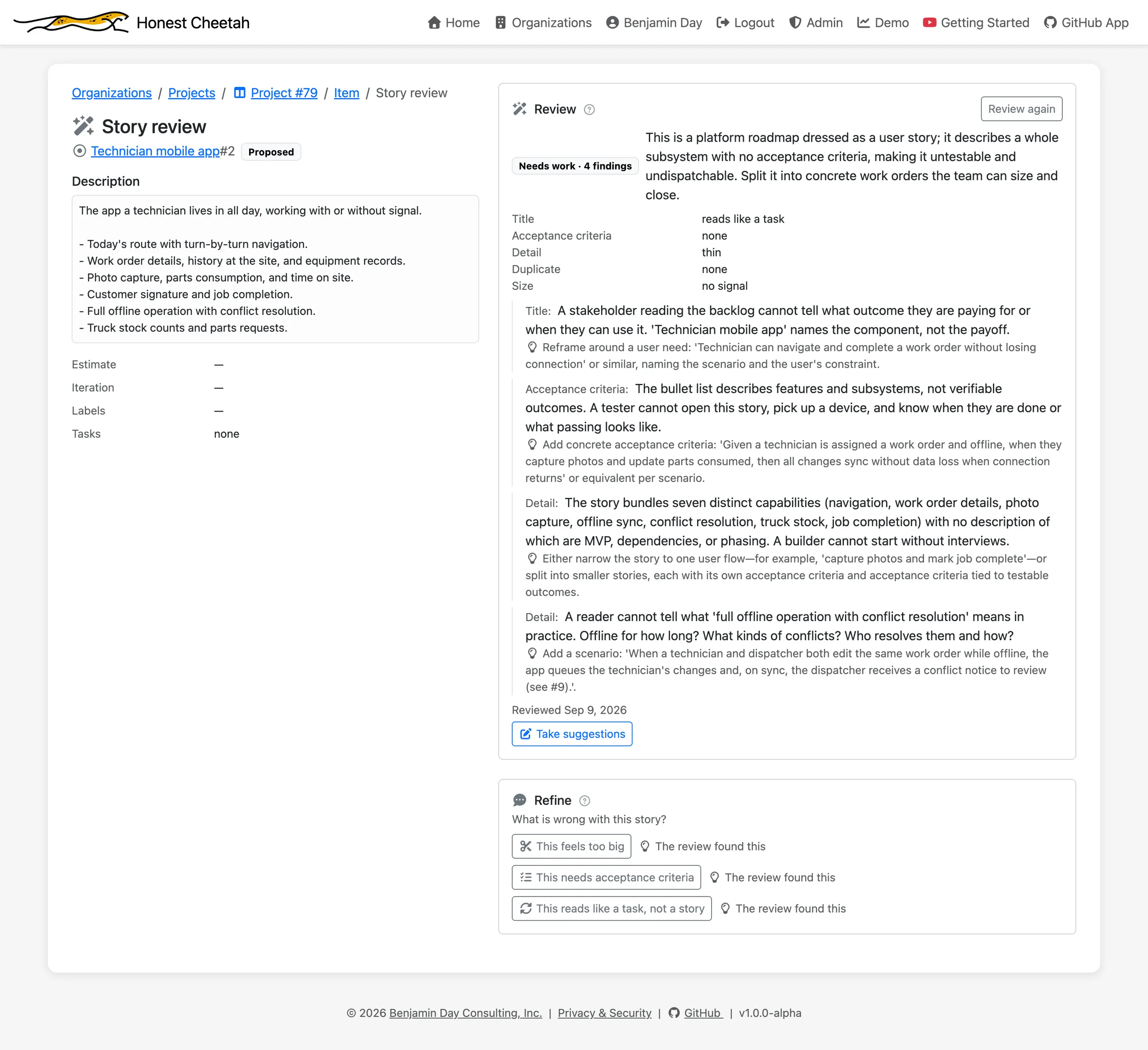
"No acceptance criteria" is a complaint. "A tester cannot open this story and know when they are done" is a reason to do something about it. That's why the findings lead with the consequence.
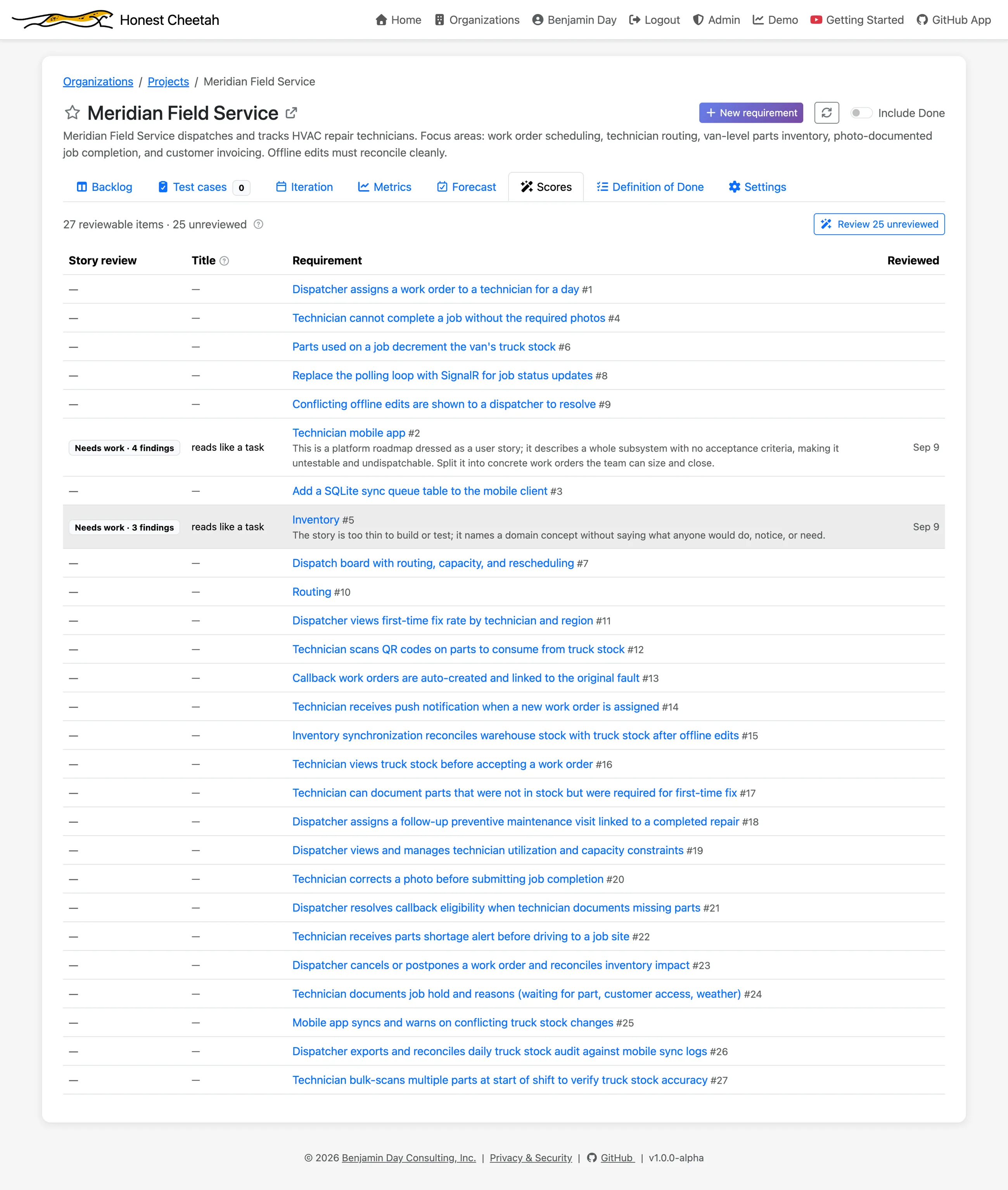
The Scores tab lists every requirement on the board with its verdict, and how many haven't been reviewed at all. "Our requirements suck" becomes a count.
Three buttons for the three usual problems
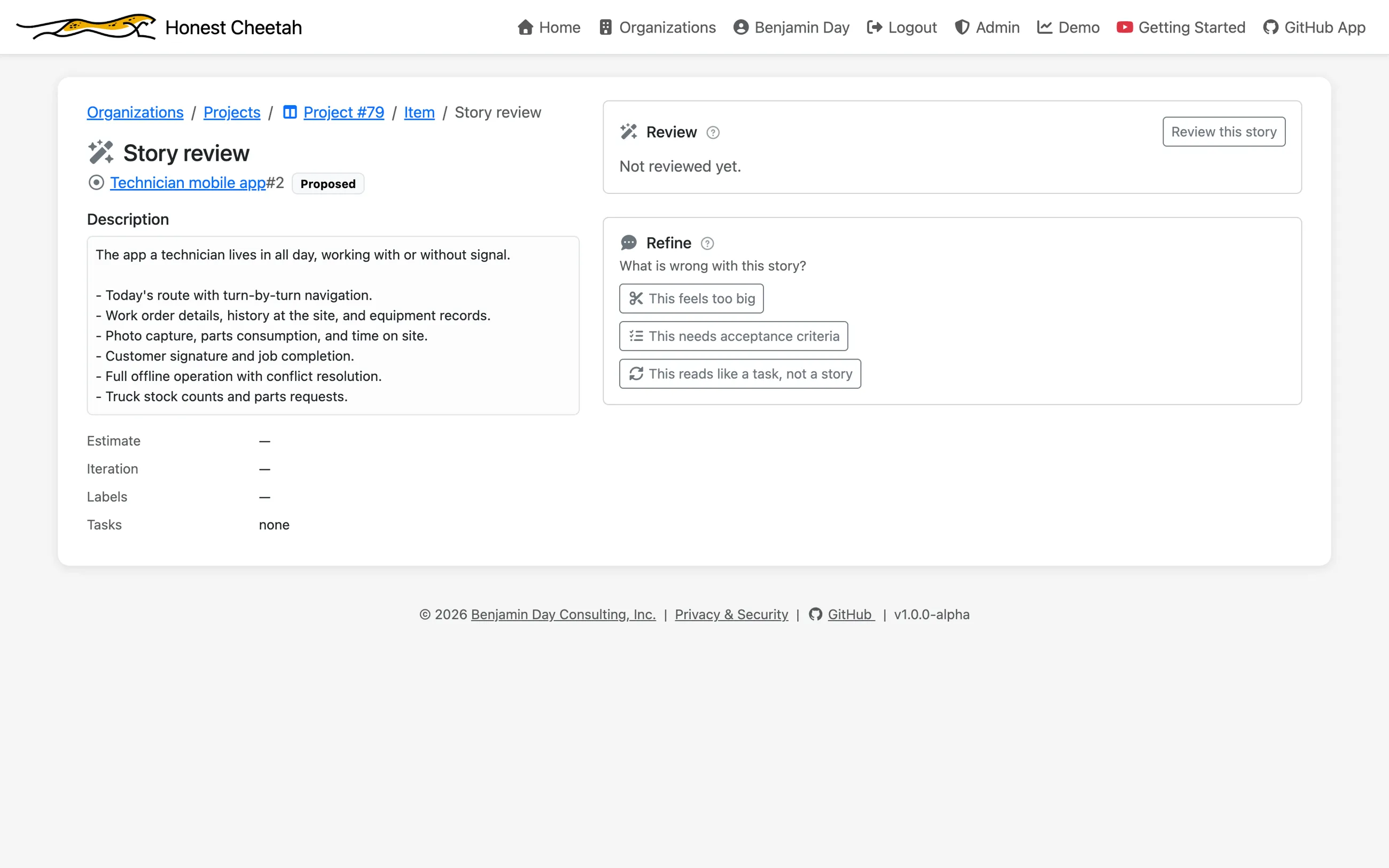
Under the review is the Refine panel: What is wrong with this story?
This feels too big
The seams and the thinner stories, in order, each with its own acceptance criteria. Edit the slices, then create them on GitHub in one click, or don't.
This needs acceptance criteria
The story opens in an editor with acceptance criteria drafted from what's already there. Save writes the issue to GitHub. Close writes nothing.
This reads like a task, not a story
"Add a SQLite sync queue table" names the work, not the payoff. It gets reframed around who needs what and why, with the technical detail kept as a note.
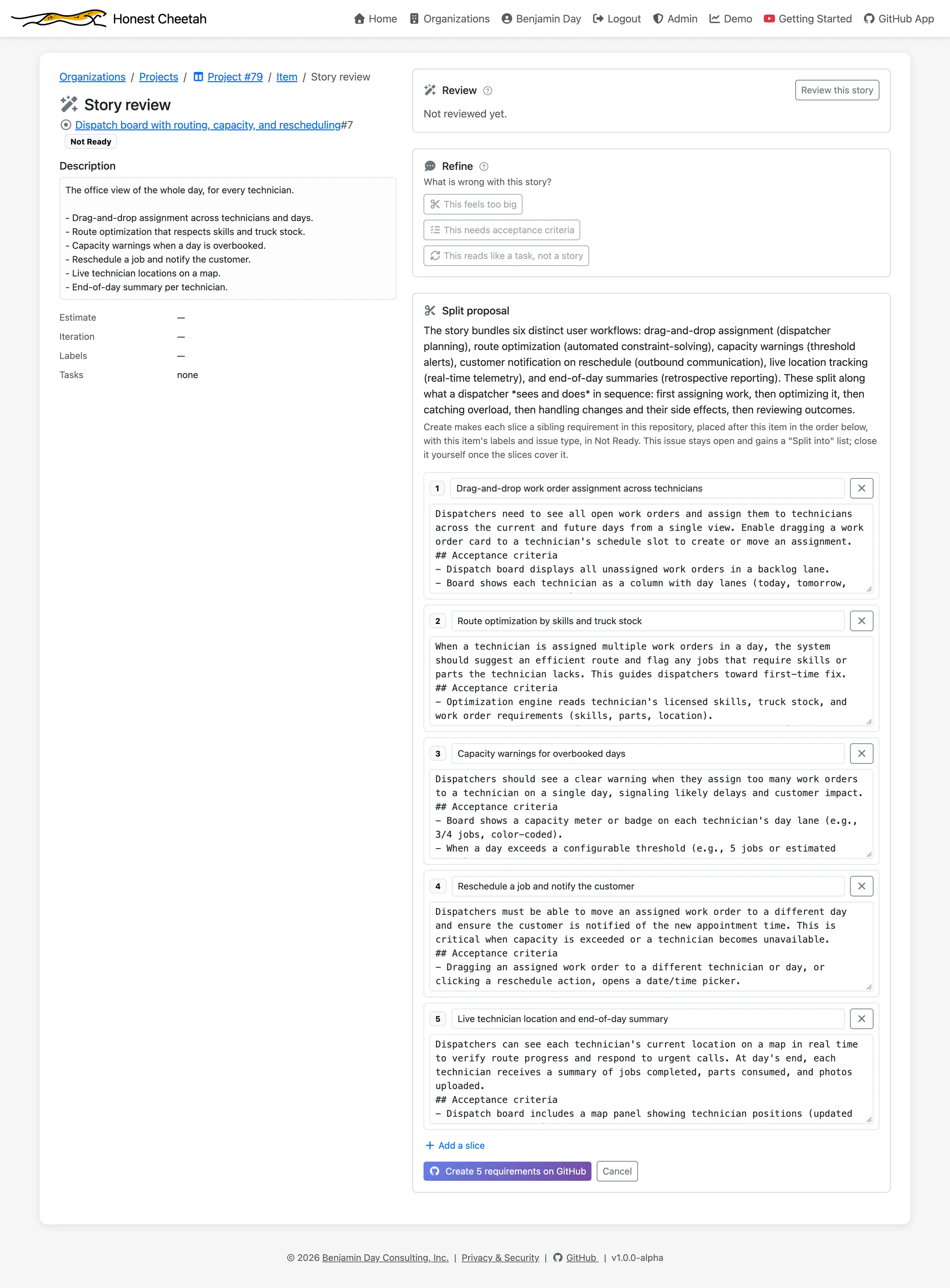
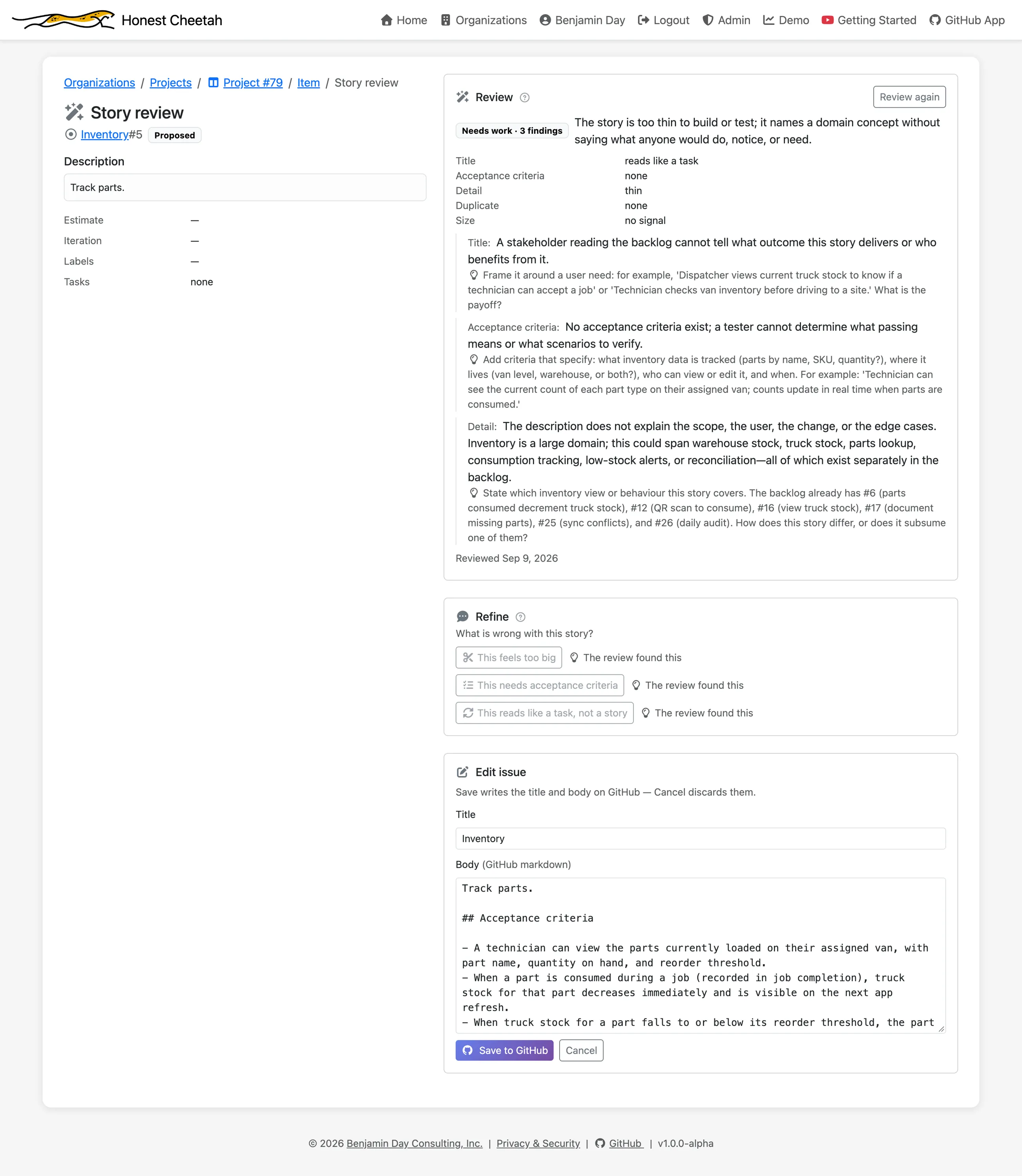
None of this replaces the conversation with the person who wants the thing. The review names the problem. The buttons offer a fix. You're still the author, and GitHub still holds the result. The refinement statuses the review works alongside are free.
Skip the blank page
Draft with AI turns a couple of paragraphs of notes into a structured requirement you can edit and save. Suggest with AI reads the project's description and README and proposes candidate backlog items on checkbox cards; check the ones you want and create them in one click.
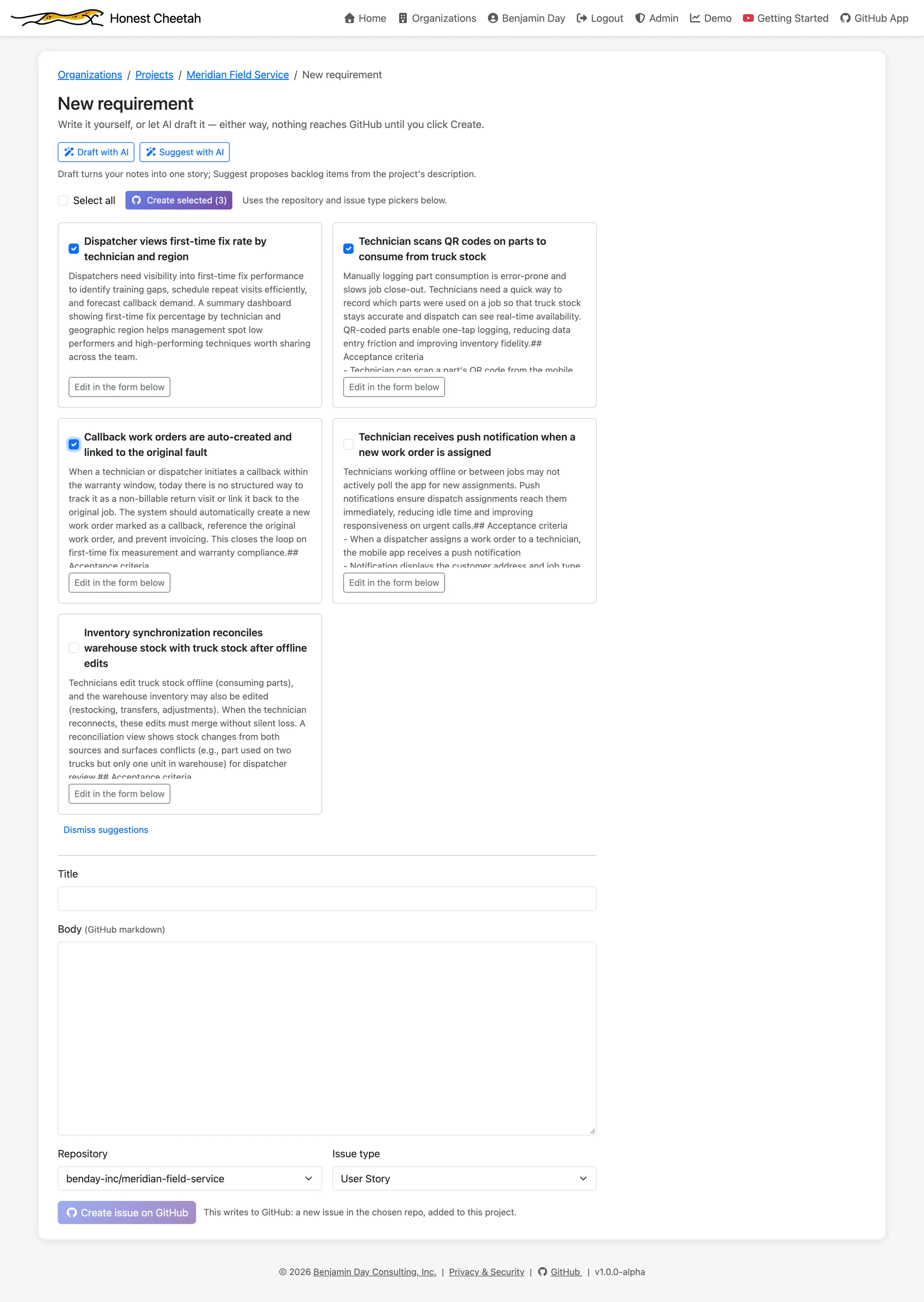
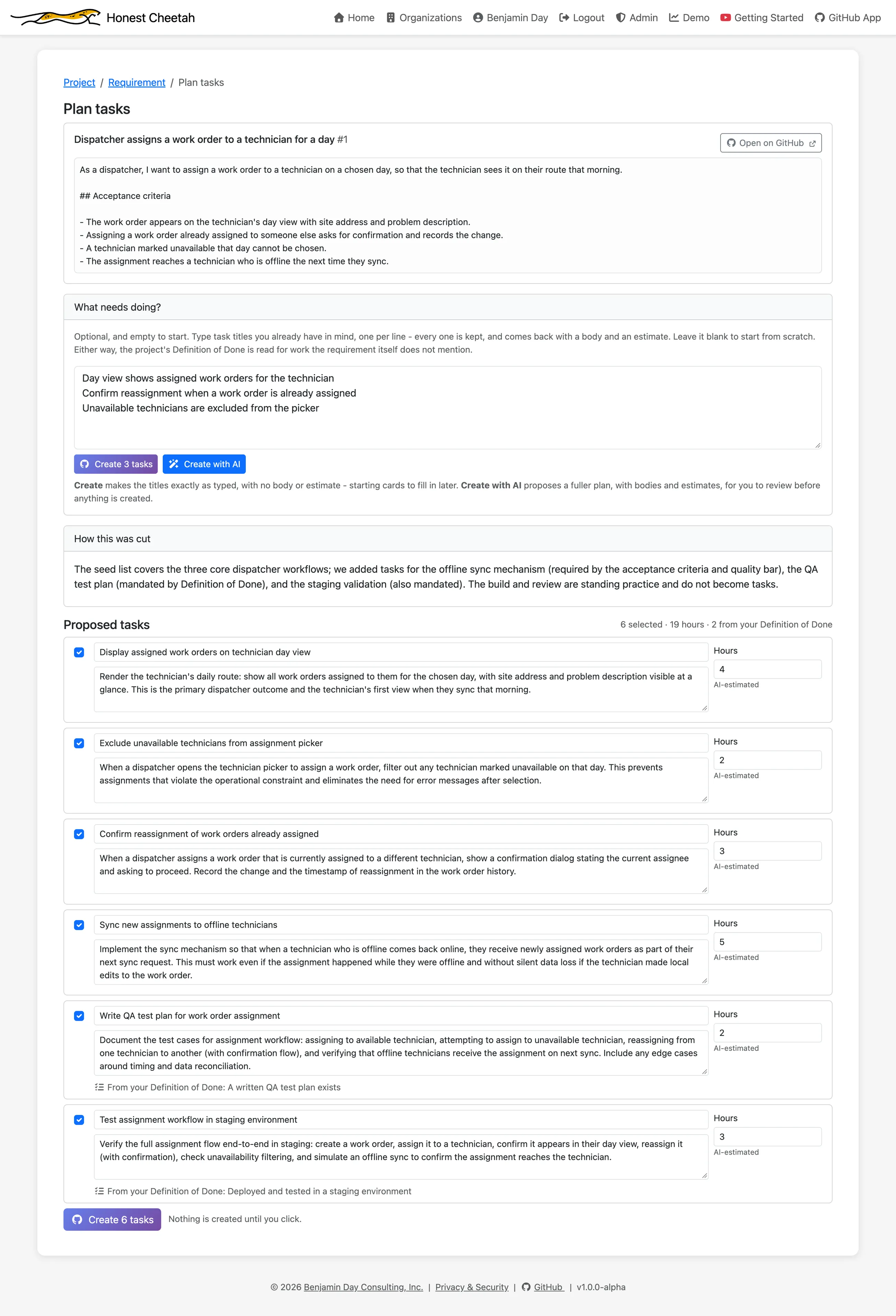
Create with AI on the Plan tasks page proposes a task breakdown for a requirement, explains how it cut the work, and estimates each task. Tasks that exist because of your Definition of Done say so, and Tailor to our project rewrites a template Definition of Done in your project's own terms.
Your metrics, explained
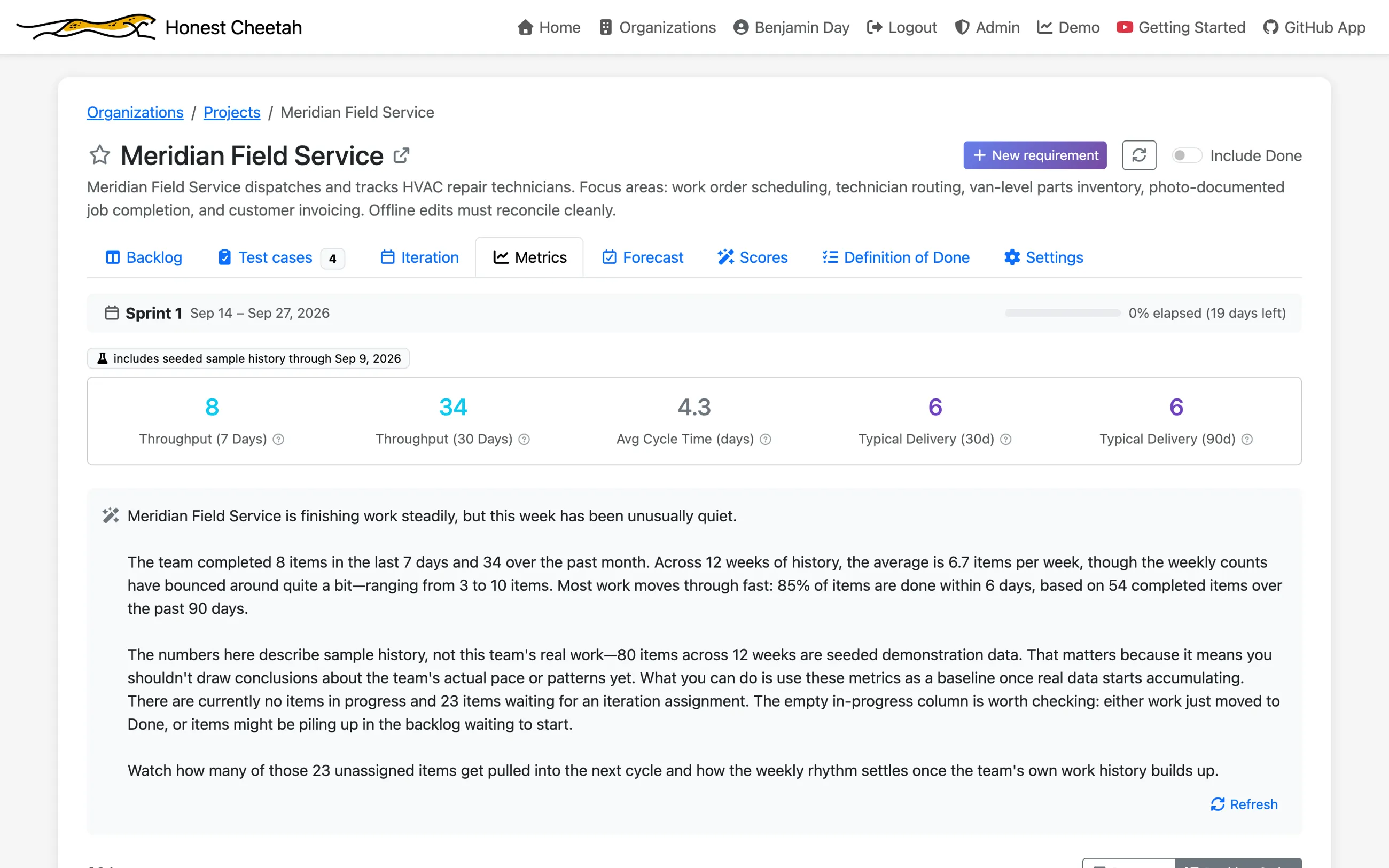
Click Explain on the metrics and the AI narrates what the numbers mean: what's trending, what's stuck, what to watch. It reads what Honest Cheetah already computed, and if part of the history is seeded, the narrative says so.
Daily News
What happened on the board while you weren't looking. Every day, every project gets a short briefing: what changed, what needs attention and what's at risk. It's waiting at the top of the backlog when you sit down.
Nobody has to remember to write it. And nobody has to trust it blindly, because the facts it was written from are right underneath it.
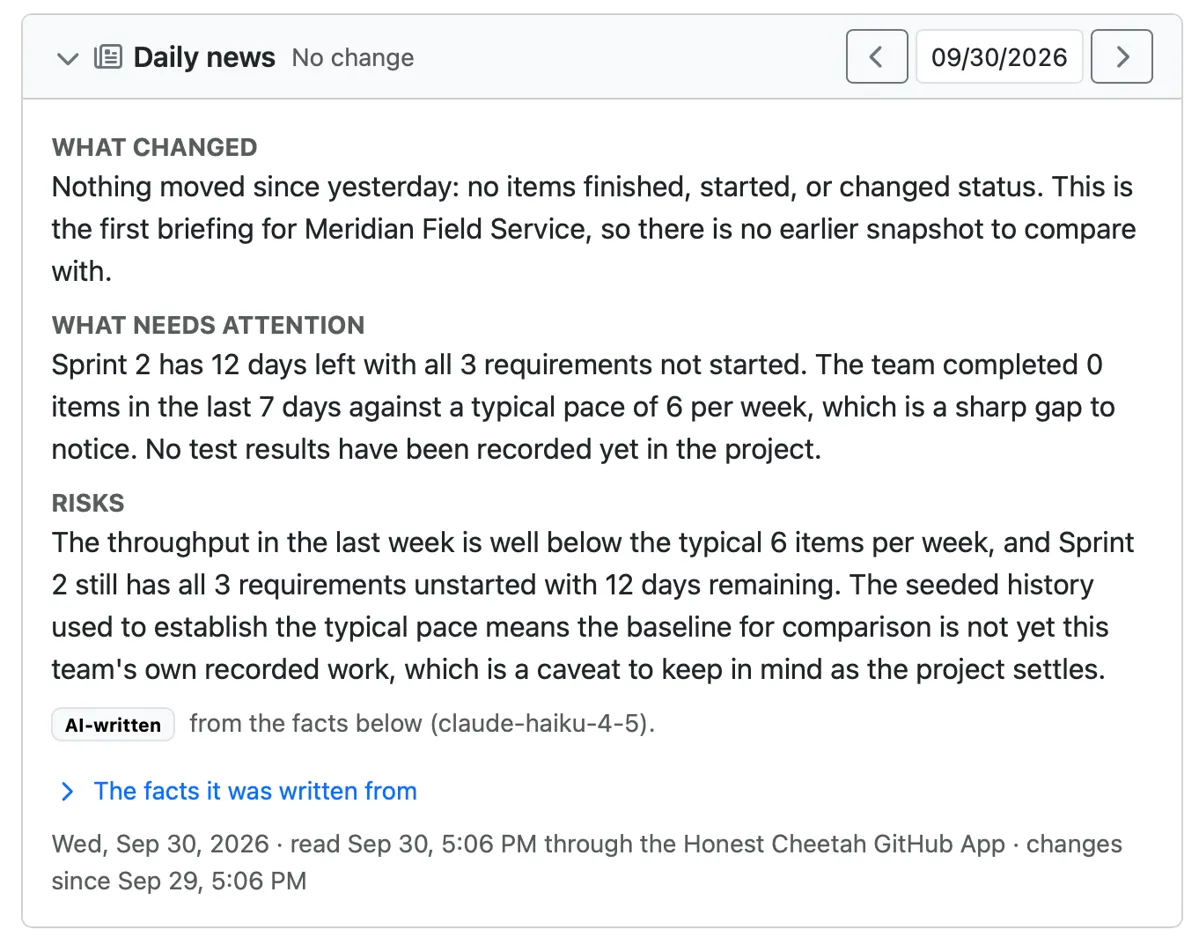
- What changed: what moved to Done, what got started, what moved back and what was added since the last read. Each requirement counts once, however many times it bounced.
- What needs attention: work that's aging, the current iteration's days left against what hasn't started, and the QA picture: results recorded, bugs filed, and requirements that went Done without a passing test.
- Risks: the last seven days' throughput against your typical week, and how many weeks of history "typical" rests on. If the history is seeded or imported, it says so.
The code counts. The AI writes it up. Every number is computed before the model sees anything. The model is told not to compute new numbers, not to guess at causes, and to repeat every caveat it's given. Then it's checked: if the write-up mentions an issue that isn't in the facts, the whole write-up is thrown away and you get the facts on their own. The write-up is badged AI-written, with the model that wrote it. When nothing moved, the card says No change and doesn't bother the AI.
It runs overnight through the Honest Cheetah GitHub App, not anyone's personal account, so it keeps working when people go on holiday and doesn't spend anyone's rate limit. History starts the night the App is installed and can't be backfilled, so install it early. Org owners see an Install the GitHub App button on the card. It doesn't email you, post to Slack or write anything to GitHub.
What it costs
AI assistance and Daily News are part of the paid plan: $25 per seat per month, five-seat minimum. Any member of your organization can start a 15-day trial for five people, with no credit card, from inside the app. Pricing →